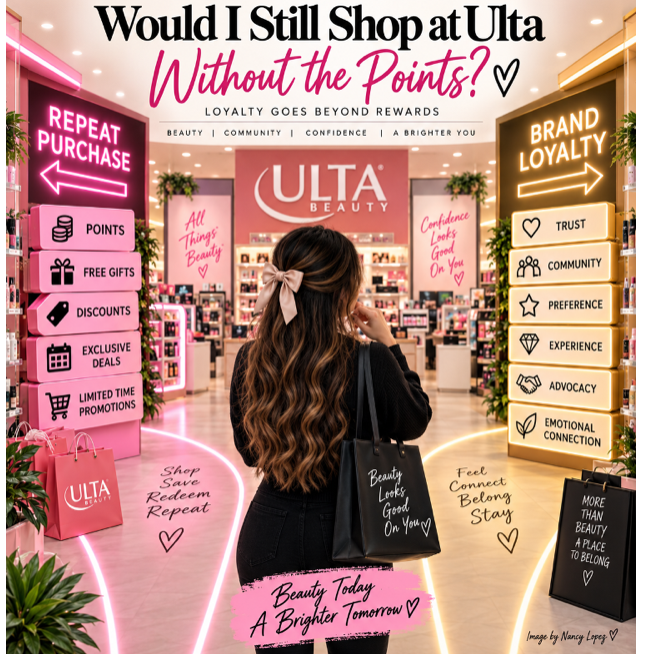
Would I Still Shop at Ulta Without the Points?
I have been shopping at Ulta Beauty since I was 18, and today I am a Diamond member. I have planned purchases around 21 Days of Beauty, accumulated hundreds of dollars in rewards, and once used more than $500 worth of points toward a high-end hair tool. Based solely on my purchase history, it seems obvious to call me a loyal Ulta customer.
But before classifying me as a “loyal customer,” marketers should ask a different question: Would I still choose Ulta if the points disappeared tomorrow?
That question changes everything.
A customer who repeatedly buys from the same company is valuable, but repeat purchases alone do not necessarily tell us why that customer keeps coming back. Discounts, rewards, convenience, or even habit can encourage someone to buy again without creating a genuine preference for the brand. Because of this, marketers should be careful about interpreting purchase frequency as proof of loyalty.
Ultamate Rewards definitely plays a role in my relationship with Ulta, but it is not the entire relationship. I can shop for both prestige and affordable beauty products in the same place. I prefer Ulta’s brighter store atmosphere, the promotions keep me engaged throughout the year, and I feel like the money I spend there creates value for future purchases. Over time, those experiences have made Ulta my first choice before I even consider comparing it with Sephora.
That distinction is important for beauty marketers. A loyalty program can encourage the next transaction, but genuine brand loyalty should help protect the relationship when a competitor offers a better discount, launches a tempting promotion, or makes switching incredibly easy.
So, would I still shop at Ulta without the points?
I would, but probably not as often.
And maybe that is a better test of loyalty. Instead of only asking, “How often does this customer buy from us?” marketers should also ask, “What would make this customer stay when we stop paying them to come back?”